Artificial football turf installation cost in India is one of the biggest concerns for investors planning to enter the sports infrastructure business in 2026. While many focus only on the initial setup cost, understanding the complete cost breakdown- including materials, labor, and return on investment (ROI)- is crucial for long-term profitability
This guide explains the full cost breakdown of artificial football turf, including materials, labor, and ROI.
1. Key Components of a Football Turf System
Before understanding the total cost, it’s important to know what actually goes into building a football turf. A turf is not just artificial grass; it is a combination of multiple components that affect performance, durability, and overall investment.
Each component plays a role in how the turf performs over time and how much maintenance it requires.
Main Components
- Artificial grass carpet
- Base layer (aggregates or concrete)
- Infill materials (rubber granules, sand)
- Drainage system
- Fencing and lighting
2. Complete Turf Installation Cost in India
Before starting a turf project, it is important to understand the overall investment required. Costs can vary depending on size, location, and material quality, which is why there is no fixed price.
For a standard 7-a-side football turf, the cost usually falls within a flexible range.
Estimated Cost Overview
| Component | Approx Cost Range (INR) |
| Base construction | ₹8 – ₹15 lakh |
| Artificial grass | ₹6 – ₹12 lakh |
| Infill materials | ₹2 – ₹4 lakh |
| Fencing & poles | ₹3 – ₹6 lakh |
| Lighting | ₹3 – ₹8 lakh |
| Labour charges | ₹2 – ₹5 lakh |
| Miscellaneous | ₹1 – ₹3 lakh |
On average, artificial football turf installation cost in India ranges between ₹1,200 to ₹2,500 per sq.ft, depending on quality and location.
Total Estimated Cost*
₹25 lakh – ₹50+ lakh
Note: Costs mentioned above are approximate estimates based on current market conditions in India (2026). Actual prices may vary depending on location, material quality, and project requirements.
3. Cost Per Sq.Ft of Football Turf in India
The total cost of building a turf is not fixed because several factors influence the final investment. Understanding these factors helps in better budgeting and planning.
Key Cost Factors
- Location: Urban areas usually have higher labor and material costs compared to smaller towns.
- Land condition: Uneven or soft soil requires more preparation work, increasing cost.
- Material quality: Premium materials increase cost but improve durability.
- Turf size: Larger fields require more materials and labor.
- Drainage requirements: Areas with heavy rainfall need better drainage systems.
These factors can significantly increase or reduce your overall project cost.
4. Material Cost Breakdown
Materials are the foundation of your turf project. The quality you choose directly affects durability, playing experience, and long-term maintenance costs.
Investing in better materials may increase initial cost, but it helps reduce repairs and improves customer satisfaction over time.
4.1 Artificial Grass (Core Component)
Artificial grass is the most important part of the turf system because it directly affects gameplay and durability. A high-quality surface provides better grip, cushioning, and realistic ball movement.
Lower-quality grass may reduce cost initially but tends to wear out faster
Types of Turf Grass
| Type | Features | Cost Impact |
| Premium/High Quality | Soft and natural feel | High |
| Medium/Average Quality | Strong and durable | Medium |
| Normal Quality | Balanced performance | Low-Medium |
4.2 Infill Materials
Infill materials are added between grass fibers to provide stability and shock absorption. They help maintain the structure of the turf and improve playing comfort.
Without proper infill, the turf can become hard and uneven, affecting both safety and performance.
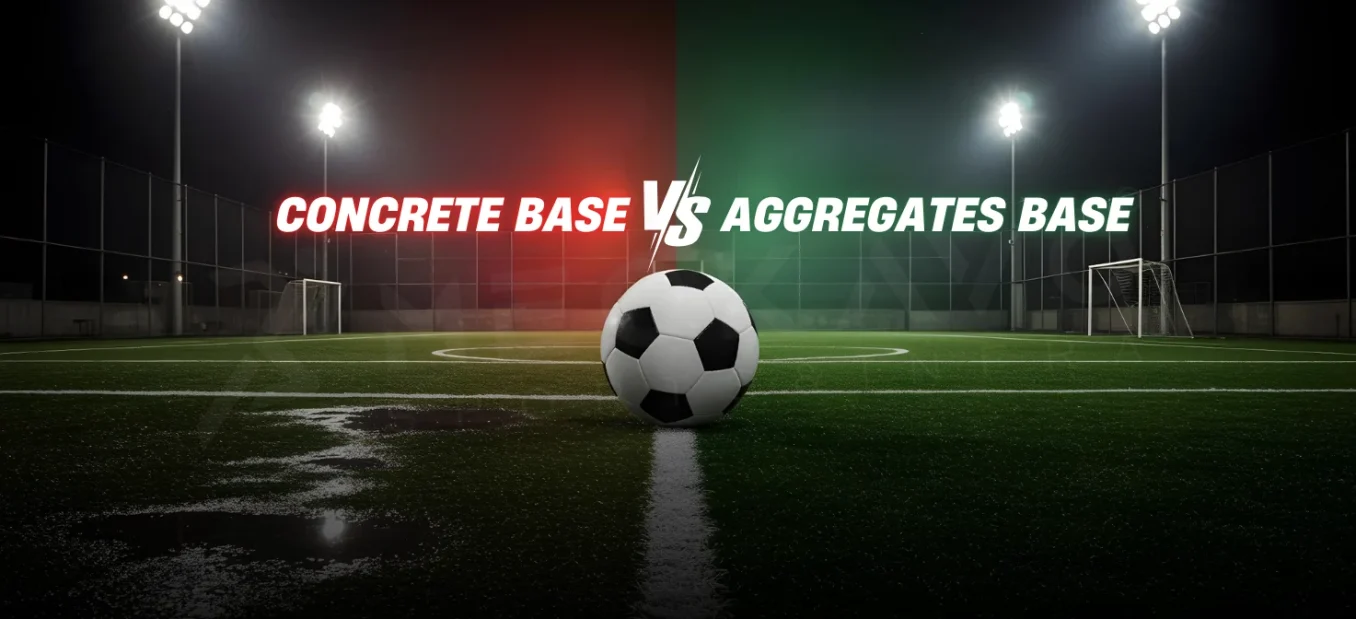
4.3 Base Construction
The base layer is the structural foundation of the turf. Poor base construction can lead to uneven surfaces, waterlogging, and long-term damage.
| Base Type | Cost | Performance |
| Aggregates base | Lower | Better drainage |
| Concrete base | Higher | Rigid structure |
In Indian conditions, aggregates base is generally preferred due to better drainage.
5. Labour and Installation Charges
Labour is a critical part of turf installation and directly impacts the final quality of the surface. Even the best materials can fail if installation is not done correctly.
Professional installation ensures proper leveling, alignment, and finishing, improving durability and safety.
Labour Cost Includes
- Base preparation
- Turf laying
- Infill spreading
- Line marking
Additional Labour Expenses
- Worker accommodation
- Food and allowances
- Project delays
These additional costs are often underestimated but can increase the total budget. Labor quality directly impacts turf lifespan by up to 30-40%.
6. Infrastructure Setup Cost
A professional turf facility requires more than just a playing surface. Proper infrastructure is necessary to attract players and ensure a good experience.
Without these elements, maintaining consistent bookings becomes difficult.
Essential Infrastructure
- Fencing and netting
- LED floodlights
- Seating area
- Parking space
Lighting is especially important since most bookings happen during evening hours.
7. Maintenance Cost (Ongoing Expense)
Many investors focus only on installation costs but ignore maintenance expenses. Regular maintenance is necessary to keep the turf in good condition and ensure long-term durability.
Common Maintenance Activities
- Cleaning and brushing the turf
- Infill top-up
- Minor repairs
- Line repainting
Estimated Maintenance Cost
₹10,000 – ₹30,000 per month
Proper maintenance helps extend the life of the turf and reduces long-term replacement costs.
8. Return on Investment (ROI)
Return on Investment (ROI) is the most important factor when building a turf, but it needs to be understood realistically. Many investors focus only on revenue without properly analyzing expenses and actual profit.
A turf business generates income daily, but long-term profitability depends on booking consistency, pricing strategy, and overall management.
Basic Break-even Formula
Break-even = Total Investment ÷ Monthly Net Profit
| Time Slot | Bookings | Avg Rate | Revenue |
| Morning | 2-3 | ₹800 | ₹1600-2400 |
| Evening | 3-4 | ₹1200 | ₹3600-4800 |
| Night | 4-6 | ₹1000 | ₹4000-6000 |
| Total Revenue Per Day* | ₹9200-13200 | ||
Monthly Financial Overview
| Category | Estimated Range (INR) |
| Monthly Revenue | ₹3 lakh – ₹5 lakh |
| Monthly Expenses | ₹50,000 – ₹1 lakh |
| Net Profit | ₹2 lakh – ₹4 lakh |
ROI Timeline
Based on the initial investment and monthly profit, most turf businesses recover their investment within:
1.5 to 3 years
Key Insight
Focusing only on revenue can be misleading. The real profitability of a turf depends on how well expenses are controlled and how consistently bookings are maintained.
Turfs with strong management, proper pricing, and regular bookings tend to achieve faster ROI compared to those that operate passively.
9. How to Maximize ROI
Building a turf alone is not enough. Active management and smart strategies are required to generate consistent income.
Consistent efforts in operations and marketing can significantly improve overall returns.
Key Strategies
- Flexible pricing
- School and academy partnerships
- Weekly tournaments
- Membership plans
10. Choosing the Right Turf Contractor
Choosing the right contractor is a critical step in ensuring long-term success. A poor contractor can lead to construction issues and higher maintenance costs later.
A reliable contractor ensures proper installation and transparency in pricing.
What to Check
- Previous projects
- Material quality
- Warranty details
- Cost clarity
Choosing an experienced turf construction company ensures better ROI and fewer maintenance issues. Always request site visits and material samples before finalizing.
11. 5-a-Side vs 7-a-Side Turf: Cost and Space Comparison
While 5-a-side football turfs are more common due to lower investment and space requirements, some investors also consider building 7-a-side turfs. Understanding the difference between these two formats is important before making a decision.
The choice between 5-a-side and 7-a-side mainly depends on available land, budget, and target audience. 5-a-side football turf is the most popular format in India due to lower investment and faster ROI.
Key Differences
| Factor | 5-a-Side Turf | 7-a-Side Turf |
| Ground Size | Smaller (Approx 80×40 ft) | Larger (Approx 120×60 ft) |
| Investment Cost | ₹25L – ₹40L | ₹35L – ₹60L+ |
| Maintenance Cost | Lower | Higher |
| Booking Demand | High | Moderate |
| ROI Speed | Faster | Slightly Slower |
A 7-a-side turf requires significantly more materials, including artificial grass, base preparation, fencing, and lighting. Because of the larger playing area, both material and labor costs increase.
In addition, lighting and infrastructure costs are higher since a larger space needs better illumination and stronger support structures.
Final Thoughts
Artificial football turf is a strong business opportunity in India, especially in 2026, where demand continues to grow. However, success depends on proper planning, realistic budgeting, and active management.
By understanding:
- Complete installation cost
- Material quality
- Hidden expenses
- Realistic ROI
You can build a turf business that is both profitable and sustainable in the long run. If you are planning to invest in a football turf, understanding these cost factors can help you avoid costly mistakes and maximize returns. Consulting with experienced turf builders can further ensure long-term success.