

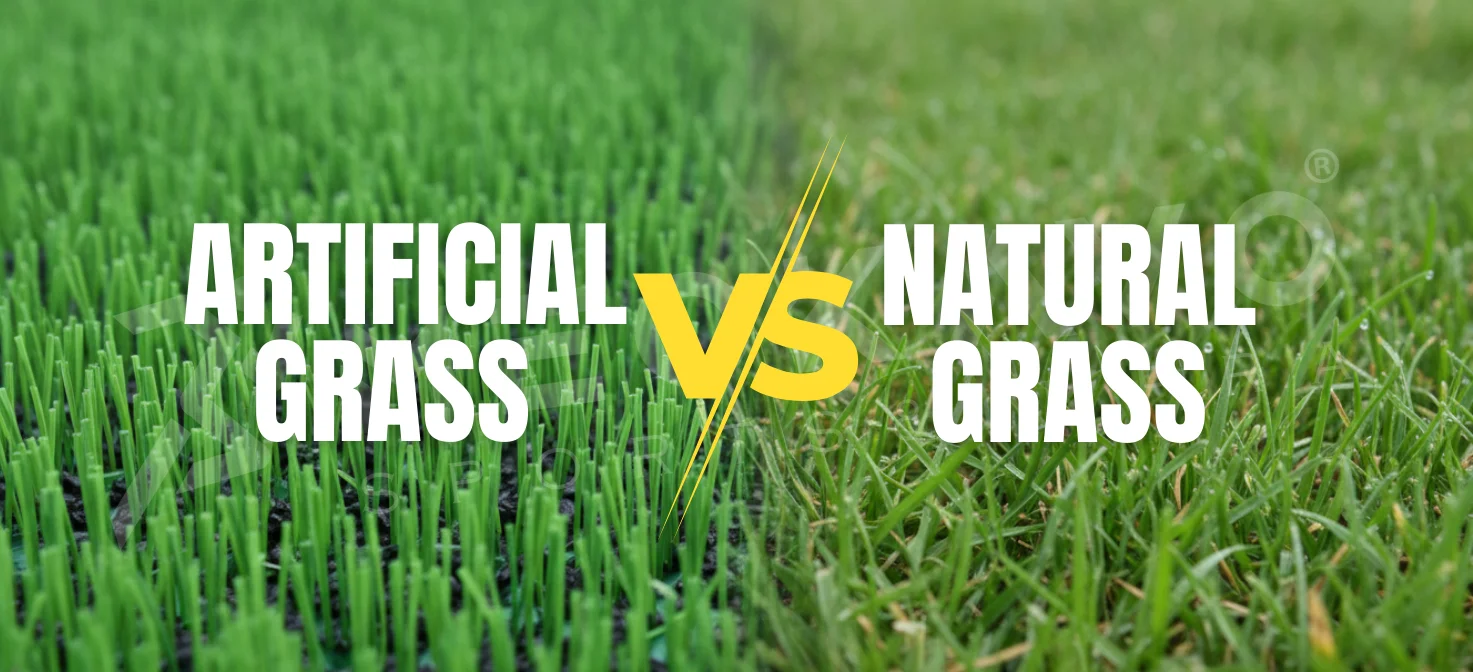
When planning a football turf, natural grass can create several challenges. It needs constant care, including watering, mowing, and patch repairs, to remain playable. Even with regular maintenance, heavy use or rain can make the ground muddy, uneven, and slippery, increasing the risk of injuries. Children and beginners are especially vulnerable, making natural grass less safe for consistent play.
Artificial turf, on the other hand, offers a reliable and safe surface all year round. It stays green, even, and smooth for many years without constant upkeep. Players can run, kick, and practice freely, without worrying about worn-out patches or slipping. Its durability and consistency make artificial turf the preferred choice for modern football grounds.
Playing Experience
Natural Grass: Natural grass can quickly become uneven, muddy, and slippery, especially during rain or heavy use. This makes it harder to run, kick, and control the ball, increasing the risk of slips and injuries. Children and beginners often feel unsafe and less confident while playing on natural grass.
Artificial Turf: Artificial turf stays smooth, even, and green all year round. Players can enjoy safer footing, better ball control, and consistent playing conditions. It allows children and adults alike to play freely and confidently without worrying about uneven patches or slippery spots.
Maintenance & Durability
Natural Grass: Natural grass wears out easily and needs constant care to stay playable. During heavy rain, it can get muddy and uneven, so you have to maintain it carefully for games to continue. Water collects in low areas, and the ground can become slippery, making it unsafe for children and beginners. Regular mowing, watering, and patch repairs are necessary to keep it in good condition.
Artificial Grass : Artificial turf stays green, even, and safe all year round. It does not get muddy or worn out, even during heavy rain or frequent use. Players can run, kick, and practice freely without worrying about slips or injuries. It requires very little maintenance, making it a long-lasting and reliable choice for schools, clubs, and professional grounds.
Safety & Injuries
Natural Grass : Natural grass can become uneven, muddy, and slippery, especially after rain or heavy use. These conditions increase the chances of players slipping, falling, or getting minor injuries. Children and beginners are most at risk, making natural grass less reliable for safe, consistent play.
Artificial Turf: Artificial turf provides a safe and consistent surface for all players. It stays even and smooth, reducing the risk of slips, falls, or injuries. Children, beginners, and professional players can train and play confidently, without worrying about uneven patches or wet spots. Its well-designed surface ensures a safer and more enjoyable game experience all year round.
Cost Efficiency
Natural Grass: Maintaining natural grass can be expensive over time. It requires regular watering, mowing, fertilizing, and patch repairs. Heavy use or rainy seasons often increase maintenance costs, making it less cost-effective in the long run.
Artificial Turf: Artificial turf is highly cost-efficient. Once installed, it requires very little maintenance - no watering, mowing, or constant repairs. Its durability allows heavy use without additional costs, making it a smart long-term investment for schools, clubs, and commercial grounds.
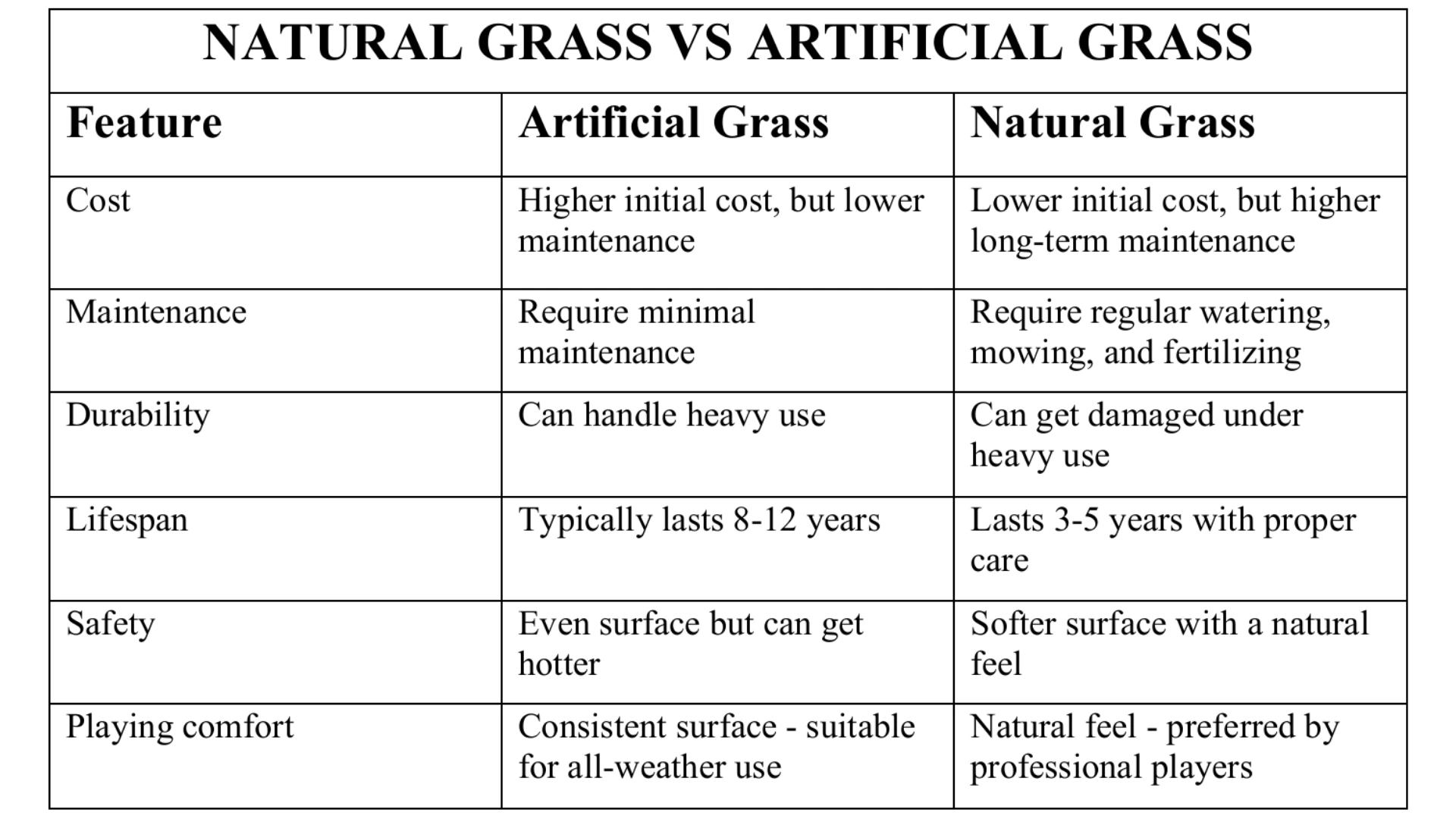
Artificial Grass vs Natural Grass - Comparison Table
