

Starting a football turf business in 2026 can give good profit, but only if it is planned properly. Many people make mistakes even before construction starts. They select the wrong location, skip important legal approvals, or try to save money by choosing cheap materials. These decisions may look small in the beginning, but they can seriously affect income and long-term success.
Technical planning is equally important. A football turf is not just artificial grass laid on the ground. It needs proper base work, strong drainage, and correct lighting installation. If these are not done properly, problems like waterlogging, uneven surface, and safety issues will start appearing very quickly. This results in repair expenses and unhappy customers.
Another common mistake is ignoring maintenance and marketing. Even a well-built turf needs regular cleaning, brushing, and proper care to maintain quality. At the same time, promotion is necessary to attract players and keep bookings regular. Without maintenance and marketing, it becomes difficult to generate steady monthly income, no matter how good the turf looks. Professional planning with an experienced turf construction company like Meckavo Sports can help avoid many of these mistakes.
Here are the common challenges in running a turf business in India:
Choosing the Wrong Location
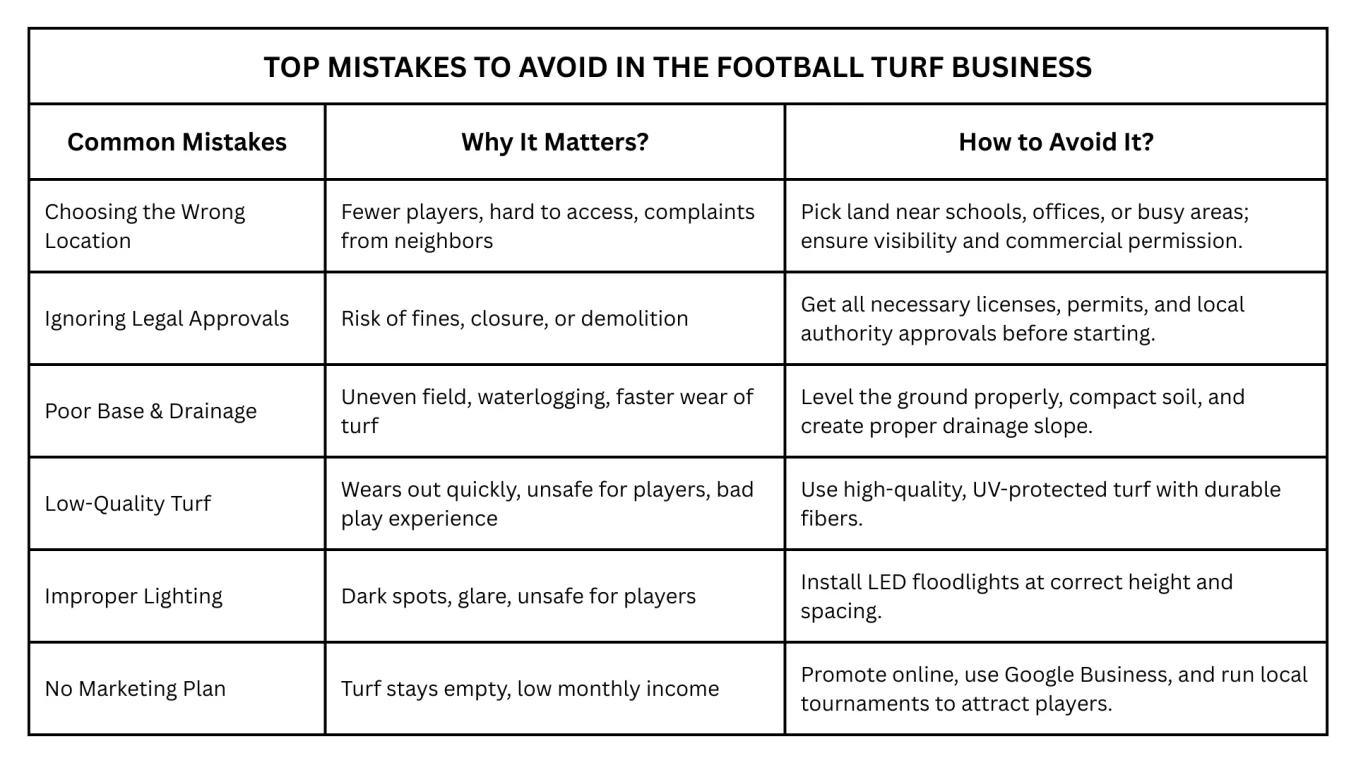
Choosing the right location is very important for a football turf business. If the area has few players, bad road access, no parking, or neighbors who may complain about noise and lights, fewer people will come to play. Before buying land, check how many people live nearby, schools, colleges, offices, and if other turfs are already there. Also make sure the land is safe, easy to see from the road, and allowed for commercial use. Picking a good location helps keep bookings high and makes steady income easier.
Ignoring Legal Approvals
Not getting legal approvals can cause big problems for your turf business. You could face fines, forced closure, or even demolition. Before starting, make sure the land is allowed for commercial use, and get permission from the local municipality or panchayat. You also need a trade license, building permission (for fences, lights, or rooftop turf), and GST registration if your income is above the limit. Some areas may need fire safety or pollution control approval, especially for lights. Doing all legal paperwork before building keeps your business safe and running smoothly.
Poor Base and Drainage Work
A strong base and proper drainage are very important for a football turf. If the soil is not prepared correctly or the ground is not leveled, the turf can sink or become uneven. Without a good slope, rainwater will stay on the field, causing waterlogging and damage. Weak edges and side support can also cause cracks or shifting of the turf. Building the base properly with compacted soil, layers of material, and a good drainage system helps the turf last longer, gives better play, and reduces repair costs.
Using Low-Quality Artificial Grass
Using cheap artificial grass may save money at first, but it causes big problems later. Low-quality turf can fade in sunlight, flatten quickly, and tear easily when players run or kick the ball. It may also have weak stitching and thin fibres, so it wears out fast and needs replacing more often. Bad turf can affect how the ball rolls, make it harder for players to run safely, and increase the risk of injuries. Good-quality turf with strong fibres, proper height, and UV protection lasts longer, feels better to play on, and gives more value for your money.
Improper Lighting Setup
Good lighting is very important for a football turf, especially for evening and night matches. Poor lighting, uneven placement, or weak lights can create dark spots and glare, making it hard for players to see the ball. Bad wiring or unstable poles can also be dangerous. Installing proper LED floodlights with the right height, even spacing, and enough brightness ensures players can see clearly, play safely, and enjoy a professional experience. This helps attract more players and repeat bookings.
No Marketing Plan
Not having a marketing plan is a big mistake for a football turf business. Relying only on walk-in customers or word-of-mouth is risky, especially if other turfs are nearby. Many people will not even know your turf exists without online visibility. Using Google Business, social media like Instagram and Facebook, local ads, and online booking systems helps attract more players. Organising small tournaments, corporate matches, or coaching programs also brings more bookings. A good marketing plan keeps your turf busy and your income steady throughout the year.
Starting a football turf business in 2026 requires proper planning, quality construction, and the right location. Avoiding common mistakes such as poor drainage, low-quality turf, and lack of marketing can help ensure long-term success. With the right strategy and professional support, a football turf can become a stable and profitable sports business in India.
